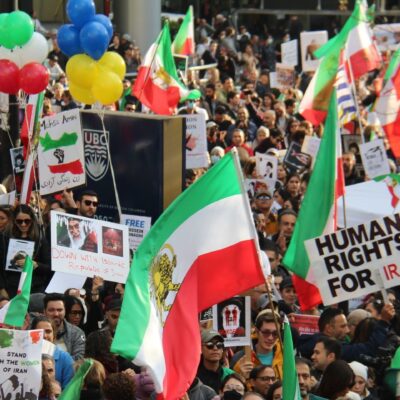
Conflict over natural forest resources is worsening in Indonesia, where colonial-era laws are being used by governments and others to acquire and access land, causing deforestation and displacement of Indigenous peoples.
Key words: Forest conflict, Indonesia, Indigenous peoples, conflict transformations.
In Indonesia’s customary forest landscapes, peace is not merely represented by silence and serenity, but by forest tenure security and the recognition of customary rights.
For Indigenous communities living in forested areas, laws and policies that claim to protect them often feel like another form of exclusion. A common experience is to discover that customary forests have been re-classified as ‘state forests’ by authorities, allowing large-scale logging, mining, and plantations, displacing local communities and depriving them of livelihoods.
Elders from Indigenous territories such as Kasepuhan Citorek in western Java, look at state-issued maps and say: ‘They have drawn lines over our customary forests, inserted them to the Halimun Salak Mountain National Park, and called them state forests!’
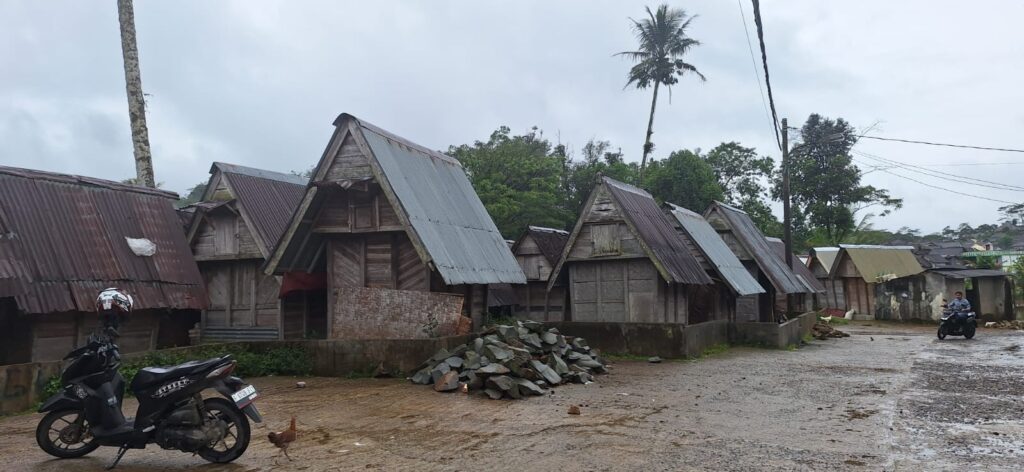
Kasepuhan Citorek village, Lebak District, Banten Province, 17 February 2025. Credit: Used with permission from the author.
This article explores repressive top-down policies that fail to recognise Indigenous peoples’ rights to their forest areas, as illustrated by cases in Pandumaan Sipituhuta (North Sumatra), Kasepuhan Citorek (West Java/Banten), Dayak Punan Dulau (North Kalimantan), and Marefenfen (Aru Islands). It also examines the role of state-led peace infrastructures—collective structures that facilitate multi-level peace building collaboration among stakeholders—in addressing customary forest conflicts in Indonesia.
Findings show that Indonesia’s forestry territorialisation policy produces tenurial insecurity, overlapping claims and environmental degradation. Formal recognition mechanisms (including Constitutional Court jurisprudence 35/2013) have increased visibility for Indigenous claims but remain bureaucratic, fragmented and slow, leaving many communities exposed to dispossession and criminalisation. State‑led peace mechanisms, including customary forest recognition, social forestry, and formal state investigations into systemic human rights violations, have achieved partial, short‑term gains but have largely failed to dismantle the structural power relations that reproduce injustice. Community‑led initiatives (such as participatory mapping, local economy projects, and Indigenous education) demonstrate locally grounded capacities for peacebuilding but require legal recognition, secure tenure and institutional support to scale.
Forest conflict and territorialisation policy
Indonesia is an archipelagic nation with around 120 million hectares of forest, roughly two-thirds of its land area, and 5.3 million hectares of marine conservation areas in its waters, all of which fall under the authority of the Ministry of Forestry. Under Indonesia’s Forestry Law, forests are classified into state forests (forests without private ownership rights and therefore under state control) and private forests (forests over which private ownership rights are held).
Indonesia is home to many Indigenous peoples who mostly live in forest areas and depend on them for their livelihoods. Yet, their Indigenous rights and territories are mostly unrecognised and remain largely invisible in national contexts. Conflicts over customary forests in Indonesia are among the most widespread, systemic, and frequently reported cases before the National Commission on Human Rights. These conflicts are rooted in the concept of territorialisation policy, inherited from Dutch colonial rule, which implemented domein verklaring (domain declaration) to control lands. This approach was reinforced during the authoritarian era of former President Suharto (1967-1998) through forestry laws (No 1/1967 and No 41/1999), which reclassified customary forests as state forests. These conflicts are also shaped by Indonesia’s broader forest politics, in which forest governance has long been used to centralise state authority and control access to land and resources
The TGHK (Tata Guna Huta Kesepakatan – Forest Land Use Policy), introduced in the 1970/1980s, has also contributed to the forest ownership and governance system. It divided forests into production, protection, and conservation zones, managed by different government bodies. ‘Production forests’ were allocated to private and state companies, while ‘conservation’ and ‘protection’ forests were managed by government authorities.
The land held by Indigenous communities as customary land has been designated as state forest without recognising their customary rights. Although a decision of the Constitutional Court in 2013 removed customary forests from state classification, the legacy of this policy continues to create displacement and loss of Indigenous peoples’ rights.
The effects of forest conflict on Indigenous communities
The four Indigenous communities of Pandumaan-Sipituhuta (North Sumatra), Dayak Punan Dulau (North Kalimantan), Marefenfen (Aru Islands), and Kasepuhan Citorek (Banten) maintain deep ancestral ties to their customary forests, yet they face serious territorial threats. These communities sustain their livelihoods through customary forest management practices, including the harvesting of ‘tombak haminjon’ frankincense, traditional farming, agroforestry, hunting, gathering, and fishing.
Conflicts in these areas involve forest-status determinations that undermine Indigenous peoples’ claims to land and resource use. Some communities, such as Kasepuhan Citorek and Pandumaan-Sipituhuta, have obtained formal recognition through local regulations. However, others, including the Punan Dulau and Marefenfen Aru, have faced decades of uncertainty regarding their legal status. In some cases, the conflict has become very contentious. For example, the Pandumaan-Sipituhuta community, despite obtaining recognition, continues to face criminalisation for its resistance to the land clearing operations of a pulp and paper company, Toba Pulp Lestari. Meanwhile, the Marefenfen Aru, which is confronting the Indonesian Navy over the seizure of its customary forest for the construction of a naval military base, filed a lawsuit with the Dobo District Court, but lost the case.
The consequences of territorialisation policy are severe. In Kasepuhan, Indigenous peoples’ have had their access to Mount Halimun Salak National Park restricted. In Pandumaan there has been large-scale deforestation driven by eucalyptus plantations. Even when forests are returned, Indigenous communities are often left with the burden of restoring degraded ecosystems. In many other contexts, overlapping claims have forced Indigenous peoples to leave their villages, forest territories, and livelihoods.
Despite some presidential decrees and legal recognition of customary forests, the legal landscape remains fragmented and sometimes inconsistent. This means that communities must navigate complex bureaucratic hurdles, and long and costly legal processes, which hinder recognition of customary lands. The state’s reluctance to decentralise forest management, and stereotypical views of Indigenous communities as economically incapable and unproductive have worsened these challenges. As a result, progress in recognising customary forests has remained slow, despite government claims of success. Addressing these problems requires bridging different perspectives and reducing the harmful impacts on Indigenous territories
Peace infrastructure
Building lasting peace infrastructure is the vital work of turning these isolated struggles into a multi-level system of cooperation that truly listens to grassroots communities.
‘Peacebuilding infrastructure’, a concept first developed by peacebuilding scholar John Paul Lederach, refers to mechanisms for cooperation among all relevant stakeholders, including local and grassroots actors, by promoting collaborative problem-solving. It can include international, governmental, and non-governmental structures that promote multi-level cooperation and, crucially, leads to institutionalising responses to conflict.
Peace infrastructure varies based on local culture, institutional traditions, context, and specific needs. It integrates actors, institutions, and strategies to address conflicts; and involves state mechanisms, legal processes, government programs, and independent commissions. Peace infrastructure is a cost-effective way to prevent violence, has a proven impact, and requires national leadership for sustainability. Its diverse forms makes it a flexible concept for tools and strategies in conflict prevention and peacebuilding.
However, the conceptual and practical arrangements of peace infrastructure are criticised for their limitations and challenges, which include unclear roles and mandates, limited resources, and risks of political influence. Effective peacebuilding infrastructure should prioritise engagement with local peace initiatives, community participation, and address systemic root causes of conflict. Others highlight issues such as poor coordination, inadequate funding, and competition for roles with other institutions. Thus, I argue that peace infrastructure should place greater emphasis on local peace initiatives, meaningful community participation, and the structural drivers of conflict, rather than top-down, state-led interventions.
State-led peace infrastructure for Indigenous forest conflicts and challenges
A government program known as Social Forestry has made significant progress in managing community-based forest resources and reducing inequality. Its approach involves local communities in the sustainable use and management of forests, while also recognising their rights, knowledge, and access to forest resources. It is widely adopted and often regarded as a relatively successful mechanism. However, it has also been criticised for prioritising state interests over the needs of Indigenous peoples. Indigenous involvement and recognition is limited and the slow, complex process of acknowledging customary forests impedes recognition of Indigenous rights. In addition, the licensing process, administrative requirements, and work-plan preparation are often too burdensome and time-consuming for Indigenous communities. Policies on forest boundaries and changes to forest area allocation are also frequently contested, as they are perceived to reduce Indigenous communities’ access to, and control over, their customary lands and resources.
Constitutional Court Decision 35/2013 represented a potentially significant step toward recognising Indigenous peoples’ rights and releasing customary forests from state control. However, the government’s reluctance to implement the ruling has weakened its impact. The long-standing delay in enacting the law reflects a lack of political will, which hinders progress.
Other peace-building mechanisms include the National Inquiry into forest-related human rights violations conducted by the Indonesian National Human Rights Commission (Komnas HAM) in 2015. It revealed systemic denial of Indigenous rights and a key achievement was the increased visibility and representation of Indigenous community members in the public sphere. The Commission’s unique mandate—combining mediation, monitoring, education, and research—potentially enables a systemic approach to resolving Indigenous forest conflicts, rather than focusing solely on case-by-case resolutions.
Following the Inquiry, the National Commission on Human Rights developed a report which identified the root causes of Indigenous forest conflicts, analysed patterns in human rights violations, and suggested steps for case management and structural policy reform. However, few of the National Inquiry’s recommendations have led to substantial policy change due to insufficient follow-up and a lack of a cohesive strategy to address institutional barriers.
Systemic corruption in natural resource sectors such as coal, oil, gas, forestry, and fisheries also exacerbates conflicts over customary forests, as highlighted by the Corruption Eradication Commission’s (KPK) National Movement to Save Natural Resources (GNPSDA).
Community-led peace infrastructure
Building and sustaining peace infrastructure for forest conflicts in Indonesia remains a challenging task. Although such efforts appear promising in theory, they have often fallen short in practice because conflict resolution initiatives are poorly coordinated and tend to address only surface-level issues, producing limited and unsustainable outcomes. State-centered and top-down approaches also tend to prioritise government and international agendas over the needs and voices of local communities.
Indigenous communities in Indonesia have actively engaged in peacebuilding by mapping customary territories. One Indigenous community member in the Baliem Valley, Jayawijaya Regency, Papua, explained that mapping is part of protecting community tenure rights. The Indigenous territory mapping works are carried out by BRWA (the Customary Territory Registration Agency) and JKPP (Participatory Mapping Network). According to BRWA’s records, as of 2022, it had registered 1,119 Indigenous territory maps covering 20.7 million hectares. These territories are spread across 29 provinces and 142 regencies/cities. Of this total, 189 Indigenous territories, covering 3.1 million hectares, have received formal recognition in the form of local regulations.
Indigenous communities also sustain peace through local economic empowerment, Indigenous education, and intergenerational knowledge transfer. These efforts move beyond formal state interventions by engaging the deeper social and relational dimensions of conflict. By identifying internal divisions and latent sources of tension, Indigenous communities can build sustainable peace infrastructure grounded in shared understanding, solidarity, and nonviolent conflict resolution.
A framework for socio-ecological conflict transformation
The following recommendations form a framework for transformative forest management and resolution of Indigenous peoples’ forest conflicts.
- Human rights, including Indigenous rights, must be respected and upheld. International human rights conventions can hold states accountable for protecting and fulfilling the human rights of their people. Human rights violations and serious environmental damage must be addressed through remedies or reparative measures grounded in international human rights principles.
- Recognising gender injustice is essential, a crucial element alongside class, caste, race, culture, and ethnicity.
- Meaningful consultation and free, prior, and informed consent (FPIC) are vital. Justice demands identifying marginalised groups most impacted by development practices and implementing processes that facilitate FPIC.
- Since conflicts over land and forests are rooted in property rights, integrating forest tenure security is crucial for transforming customary forest conflicts.
- Sustainable peace can only be ensured through grassroots movements. My research highlights the role of AMAN (The Indigenous Peoples Allianceof the Archipelago), a national alliance; and local Indigenous movements. These groups have impact through ongoing mapping of customary territories, reclaiming customary forests, public rallies and protests, and legal battles to challenge unequal social structures.
- A political ecology and environmental peacebuilding perspective situates forest management within a broader socio-political context. It analyses power dynamics, social inequalities, and historical factors to uncover the root causes of conflict, thereby supporting equitable and sustainable solutions.
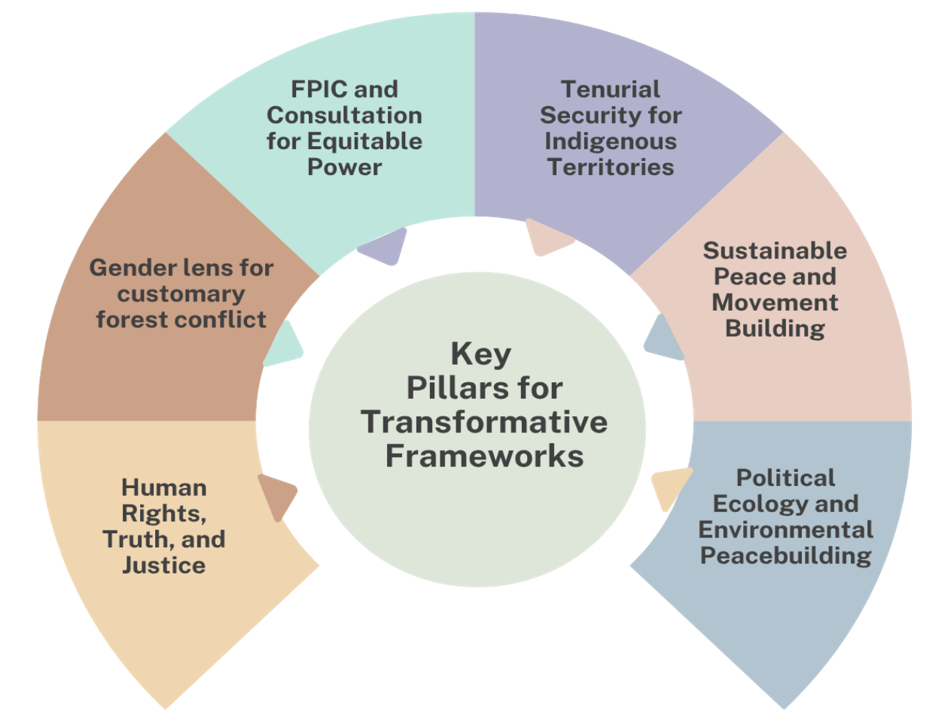
Figure 1. Key Pillars for Transformative Frameworks. The Framework can be institutionalised as guiding principles across sectors, ensuring Indigenous peoples retain control over decision-making. Credit: Used with permission from the author.
Resolving forest conflicts requires a fundamental rethinking of power dynamics
Indonesian Indigenous communities experience systemic land displacement. Existing peace infrastructure and policy mechanisms have largely failed to confront the systemic nature of forest conflict. Focusing on dispute settlement or technical land administration, without addressing the underlying relations of power and exclusion, risks reproducing the conditions that generate conflict.
Human rights and peace researchers and practitioners should partner with Indigenous leaders to design frameworks that not only resolve conflicts but also transform unjust systems and prevent future ones through sustainable, equitable forest management. Only through such radical and arduous steps can peace infrastructure truly transform the root causes of Indigenous forest conflicts.
Image: Forest degradation by a roadside in Pollung, Humbang Hasundutan District, North Sumatera, 24 January 2025. Credit: Used with permission of the author.