Much of South Asia is highly volatile. It includes two nuclear-armed rivals, India and Pakistan; it includes Afghanistan, which has been shaped by decades of war; and it sits adjacent to a geopolitical arena influenced by China, Russia, Iran, and the United States. In this setting, interstate tension, militant violence, and shifting great power alignments intersect to create an extremely fragile security environment. The danger of this environment is underscored by the reality that contemporary conflicts between India and Pakistan continuously expose the frailties of regional deterrence strategies during active border crises.
The region’s insecurity must also be understood in light of the weakening multilateral order established under the United Nations Charter. While the Charter rests on sovereign equality and restraint in the use of force under article 2(4), these principles have come under growing pressure from selective compliance and unilateral interpretations of self-defence under Article 51. This erosion is particularly dangerous in South Asia. When states frame strategic deterrence or cross-border military responses as defensive measures, the strict international law requirements of necessity and proportionality under jus ad bellum become highly contested, significantly increasing the risk of miscalculation and rapid escalation.
The withdrawal of US/NATO forces and the Taliban’s return to power marked a major turning point
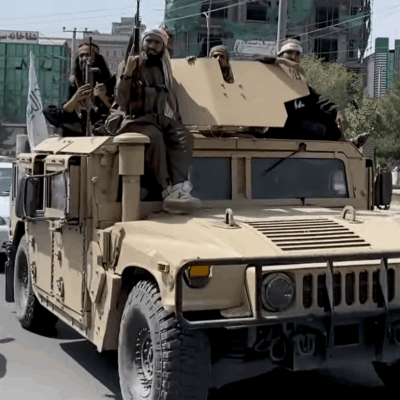
The collapse of the Afghan Republic in August 2021 reshaped military dynamics in the Afghanistan–Pakistan tribal regions and strengthened the symbolic appeal of armed insurgency and radical groups. For organisations such as the Tehrik-e-Taliban Pakistan (TTP), Islamic State Khorasan Province (ISKP), and Al-Qaeda, the Taliban’s victory reinforced the narrative that extremist movements could outlast global powers.
Regional neighbours—Iran, Russia, China, India, Uzbekistan and Kazakhstan, with Pakistan (pressured into support)—initially supported the US intervention to neutralise terrorist threats. But after 20 years most neighbouring countries, except for India and Tajikistan, viewed the US presence as a greater threat to their stability than the Taliban. The formation of a militia called the Fatimyon, which recruited Afghan refugees in Iran and sent them to fight the terrorist group ISIS in Iraq and Syria, added further layers of complexity.
South Asia as an interconnected conflict system
For much of the post-1947 period, South Asia’s landscape was defined by the India–Pakistan rivalry, the Cold War, and the War on Terror. Since both states became overt nuclear powers in 1998, repeated crises have raised fears of nuclear escalation. However, India was driven primarily by its quest for strategic autonomy and its goal of establishing a credible deterrent posture against a conventionally superior China, rather than solely by the threat from Pakistan. This two-peer security dilemma alters how regional deterrence operates, as India’s balancing acts against Chinese advancements inherently reshape the risk dynamics with Islamabad. There is also added complexity due to internal crises from Bangladesh’s political transition; internal conflicts and security challenges in Sri Lanka and the Maldives as well as continued internal conflicts in Pakistan and Afghanistan.
Afghanistan’s instability intersects deeply with regional rivalries. Conflict in one state increasingly shapes the security environment of others, particularly along the Afghanistan–Pakistan frontier, where weak governance, militant activity, and competing state interests converge.
India’s role within this system extends well beyond its classic rivalry with Pakistan. Its cautious re-engagement with the Afghan Taliban reflects pragmatic realpolitik focused on concerns over regional instability and transnational threats such as ISKP. Tensions along the Line of Control in Kashmir continue to intersect with militant activity, reinforcing the link between sub-state violence and interstate rivalry.
Quantitative indicators reinforce this pattern. Pakistan recorded over 5,551 conflict-related casualties across more than 1,272 incidents in 2025, marking one of its deadliest years in over a decade. The Centre for Research and Security Studies notes a 68 percent surge in fatalities in Khyber Pakhtunkhwa and a 28 percent rise in Baluchistan, driven by intensified operations of the TTP and the Balochistan Liberation Army, and counter terrorism operations.
The Taliban’s return in Afghanistan reinforced this interconnectedness. It energised militant narratives across the region by showing that an insurgent movement could withstand international military pressure and reclaim state power. That perception has been particularly significant for groups seeking to mobilise recruits through religious, anti-state, or anti-foreign narratives.
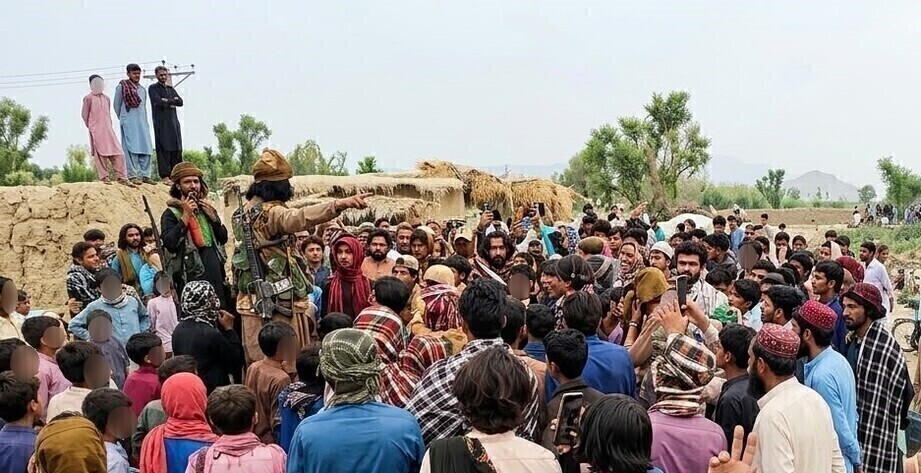
A Baluch fighter talking to villagers in Baluchistan province, Pakistan, 2026. Used with permission from BCPCR, Bacha-Khan Centre for Peace and Conflict Resolution. Militant networks and the regionalisation of violence.
Militant organisations remain central to regional conflict dynamics. TTP continues to pose a threat to Pakistan’s internal security. Although ideologically aligned with the Afghan Taliban, it operates as a distinct organisation with its own command structure and its own anti-state agenda directed at Pakistan.
The broader militant ecosystem extends beyond TTP. Kashmir-centred groups such as Lashkar-e-Taiba (LeT), Sipah-e-Sahaba and Lashkar-e-Janghawi, along with other jihadi and sectarian organisations, have complex associations with Al-Qaeda and Central Asian militant groups, including ETIM (East Turkestan Islamic Movement) of China and Juhesh ul Adel of Iran. According to recent United Nations security assessments, these groups, alongside ISKP, have also maintained varying forms of presence or influence across Afghanistan and Pakistan, Central Asia and beyond.
These networks are the legacy of Cold War-era investment and symptoms of the US-led War on Terrorism, reflecting historical state strategies and structural marginalization. Subnational exclusion in Baloch and Pashtun areas has enabled extremist insurgency and criminal networks to expand. Groups that were once cultivated for strategic depth in Afghanistan have increasingly challenged the stability of the Pakistani state themselves.
Field evidence collected by the co-author from the field in 2025 indicates that these networks have become more cohesive since 2021. The TTP has benefited from the abandonment of military equipment and reduced fragmentation. Furthermore, the absence of an inclusive political framework in Afghanistan and the repression of women and minorities continue to drive international isolation and internal instability.
The limits of tactical peace efforts
The attempts to negotiate with TTP after the Taliban’s return illustrate the limitations of narrow peace initiatives that do not address underlying political realities. Pakistan, under the previous military leadership, explored talks with TTP through tribal intermediaries and with Afghan Taliban facilitation. Yet the process struggled from the outset.
One central problem was analytical misreading. The Pakistani state sought to engage TTP, in part, through tribal jirga mechanisms associated with the structure of the former FATA (Federally Administered Tribal Areas). That approach underestimated how far TTP had evolved from a loose tribal insurgency into a more centralised, ideologically cohesive militant organisation. Traditional mediation tools alone were ill-suited to an actor whose identity, command structure, and ideological agenda had changed.
A second problem was strategic inconsistency. Pakistan’s approach shifted from conciliation to pressure, especially after the change in military leadership. Demands increasingly focused on compelling the Afghan Taliban to restrain, hand over, or formally delegitimise TTP through the issue of a religious fatwa, declaring their war against a Muslim state unlawful. Yet this expectation overlooked the Taliban’s own internal constraints. Longstanding ties among militant actors, battlefield histories, and fears of internal fragmentation all limited the Taliban’s ability to comply.
This demonstrates that negotiations with militant actors cannot succeed without addressing underlying political and structural conditions; otherwise, they are reduced to short-term security bargaining.
ISKP, Baloch insurgency, and layered insecurity
ISIS originated in Iraq and Syria, where it was founded in response to the US invasion in 2003, and its regional expansion was driven by regional rivalries and the old connections of its leaders to the Pakistan–Afghanistan frontier region. ISKP emerged as a powerful militant network, adding a further layer of complexity. Since its emergence in 2015, the group has exploited conflict, fragmentation, and weak governance across the Afghanistan–Pakistan tribal region. Its early leadership reflected the permeability of militant networks: figures associated with both TTP and the Afghan Taliban moved into the organization, underscoring how militant ecosystems can mutate into more radical forms with wider transnational agendas.
Although ISKP was weakened before 2021 by Afghan and international counterterrorism pressure, the post-withdrawal environment and the release of thousands of their fighters—including several of the most senior leaders after the Taliban returned to power—enabled it to regain space by adopting a different tactic. It has since demonstrated the capacity to carry out high-profile attacks and recruit across borders.
Mutual accusations between regional actors further complicate the situation. Taliban authorities have alleged support from Pakistan for ISKP, while Pakistan has accused the Taliban of tolerating TTP activity (Pakistan has also accused India of supporting the Taliban and TTP). Recently, reports from the ground suggest that Pakistan is trying to launch a new phase of proxy war, using former desperate members of the Afghan Security Forces and local jihadi commanders to re-arm them, repeating the same failed policy of the past, a move widely reported by the media.
Pakistan also faces a separate insurgency in Balochistan, rooted in political, economic and ethnic grievances. It has become one of the most contested regions of Pakistan. According to media reports and accounts from the local population, many areas in this region are out of the control of the Pakistani government. External support may have played a role in sustaining segments of the insurgency; even when Pakistan often exaggerates its scale for political purposes, it remains an important factor of instability. The coexistence of multiple jihadist and nationalist insurgencies creates layered insecurity in which different forms of violence reinforce one another.
Global power competition and strategic spillover
South Asia’s conflict dynamics are increasingly shaped by wider geopolitical competition. China’s expanding presence in Pakistan through the China–Pakistan Economic Corridor, India’s deepening strategic partnerships with the US and other Indo-Pacific actors, and Russia’s growing engagement with regional states all reflect the emergence of a more multipolar regional order. Furthermore, the ongoing conflict involving the US, Israel and Iran reverberates far beyond the Gulf, heavily impacting the wider South Asian region.
India’s partnership with the US is often viewed by Western and Indo-Pacific policymakers as a stabilising factor in the broader regional balance, particularly in relation to maritime security, economic connectivity, and concerns about China’s growing influence. However, Pakistan and China frequently interpret aspects of this partnership through a security lens, reflecting persistent regional threat perceptions and strategic competition.
Relations between the US, India, and Pakistan continue to evolve in response to shifting geopolitical circumstances. Recent diplomatic efforts by Pakistan to facilitate communication between Washington and Tehran, following airstrikes by the US and Israel on Iran in February, have contributed to renewed engagement with the US, including high-level diplomatic exchanges. Nevertheless, structural constraints remain, particularly Islamabad’s close strategic relationship with China and longstanding concerns in Washington regarding regional security policies.
Trust deficits continue to shape regional diplomacy. Iranian policymakers remain cautious about Pakistan’s close security and political ties with both the US and Saudi Arabia, while broader regional actors often express concerns about the reliability of international commitments amid an increasingly fragmented global order.
Consequently, regional rivalries are no longer driven solely by local disputes. They are increasingly intertwined with wider geopolitical competition, making much of South Asia both a participant in and a reflection of broader transformations in the international system. In this context of trust deficit, local conflicts become more vulnerable to external manipulation and more difficult to resolve through bilateral channels alone.
Global instability is reflected in rising military expenditure, which reached approximately US$2,887 billion in 2025. This underscores the widening gap between investment in conflict and in peace.
Conflict transformation as a framework
Traditional security approaches prioritise deterrence and military capability. However, South Asia’s conflicts are also driven by political exclusion, economic inequality, ideological mobilisation and manipulation and instrumental use of non-state actors.
Conflict transformation offers a broader analytical framework. Sociologist Johan Galtung’s concept of structural violence highlights how unequal political and social systems can produce conflict even in the absence of open war. John Paul Lederach’s work goes further, arguing that sustainable peace requires transforming relationships, institutions, and the broader social conditions that perpetuate violence.
Applied to South Asia, this perspective shifts focus from symptoms to root causes. The persistence of militancy is inseparable from political marginalisation, uneven development, and securitised state practices, as well as the legacy of massive US-Saudi-Pakistani investment in militant groups during the 1980s against the Soviet invasion of Afghanistan. Because coercive responses fail to address these sustaining environments, grievances often remain, causing violence to re-emerge in new organisational forms.
The path to peace transformation
Because South Asia operates as an interconnected system of conflicts, its interlocking regional and global dynamics create a security landscape of exceptional complexity. Peace must therefore be conceptualised in systemic terms.
Nonetheless, a practical point of departure is essential. Initial efforts must focus on incremental, high-priority steps, such as establishing sustained bilateral and multilateral dialogues and directly addressing the destabilising impact of violent non-state actors. By respecting the legitimate security concerns of all sides, these foundational measures serve as a modest but necessary prerequisite to overcoming systemic mistrust and building a resilient regional order.
Strengthening crisis management and strategic restraint
India and Pakistan require more credible and institutionalised crisis-management mechanisms that extend beyond military hotlines. These should include sustained political dialogue, transparency measures, confidence-building initiatives, and regular diplomatic engagement. Equally important is a shared commitment to avoid using Afghanistan as an arena for proxy competition. Without such measures, bilateral crises risk escalating into broader regional confrontations, particularly in an environment where militant actors can exploit interstate tensions. Implementing these frameworks faces steep and deeply entrenched challenges. Decades of mutual mistrust, asymmetric security strategies, and domestic political pressures make comprehensive breakthroughs extremely difficult. However, realistic first steps can focus on low‑risk, high‑return measures. These may include a firm commitment from Pakistan and India to de-link conflict in Kashmir from crises in Afghanistan and avoid using it as a battleground for their conflicting interests.
Mutual non-interference and regional dialogue
Afghanistan, Pakistan, and India require a framework of verifiable commitments to ensure that militant groups do not use the territory of one state against another. However, technical monitoring and security cooperation alone are insufficient. They must be accompanied by sustained political dialogue to address the historical disputes, security dilemmas, and competing threat perceptions that have encouraged the use of proxy strategies. Such a framework should gradually expand to include other regional stakeholders, creating a broader regional consensus against using militancy as an instrument of state policy.
Revisiting security doctrines and rebuilding bilateral trust
A growing body of evidence suggests that policies associated with Pakistan’s pursuit of strategic depth in Afghanistan and securitising trends in India, Pakistan and Afghanistan have generated unintended consequences, including militant blowback and declining regional trust. At the same time, decades of mutual suspicion between Kabul and Islamabad have contributed to recurring cycles of accusation and retaliation. Breaking this pattern requires sustained engagement, confidence-building measures, and a gradual shift towards cooperative management of shared security challenges and promoting the vast potential for economic cooperation.
Inclusive governance and international re-engagement
Afghanistan’s long-term stability remains closely linked to the development of a more inclusive political order. Durable peace is difficult to achieve under conditions of political exclusion, gender repression, and international isolation. In this regard, greater international and regional support for a dedicated UN Special Envoy for Afghanistan, could provide a structured pathway for political engagement, institutional reform, and Afghanistan’s gradual reintegration into the international system.
Investing in border regions, development and political inclusion
Conflict-affected regions, including Kashmir, Balochistan, and the Afghanistan–Pakistan frontier, require sustained investment in governance, education, infrastructure, and economic opportunity. Expanding legitimate avenues for political representation and socio-economic mobility is essential to reducing the appeal of violent mobilisation.
From narratives of violence to narratives of peace
The ideological dimension of conflict requires far greater attention. Extremist movements are sustained not only through weapons and financial resources but also through narratives that glorify violence, victimhood, and exclusion. Countering these narratives requires long-term investment in quality education, credible religious scholarship, civic dialogue, and responsible engagement across digital and social media platforms.
A more sustainable future depends on a shift from conflict management to conflict transformation, one that combines regional dialogue, mutual non-interference, inclusive governance, and economic opportunities. While politically very challenging, such an approach offers the most credible pathway towards durable peace and stability in South Asia.
Authors: Mohammad Masoom Stanekzai is the former Chief Peace Negotiator of the Islamic Republic and Minister. Sanaullah Tasal is an Afghanistan–Pakistan Security Analyst, Counterterrorism Researcher (TTP, ISKP & Al-Qaeda), Director, Bacha Khan Centre for Peace & Conflict Resolution, Former Senior Program Officer, United States Institute of Peace (USIP), Former Senior analyst, National Directorate of Security (Afghanistan).
Main image: TTP/BLA fighters at checkpoints in Quetta, Pakistan, 2026. Used with permission from BCPRC, Bacha-Khan Centre for Peace and Conflict Resolution.