Taiwan is a multiethnic nation whose successive waves of migration have both triggered resource conflicts and enriched the island’s cultural landscape.
Among Taiwan’s many ethnic groups, the Indigenous peoples of the Austronesian language family differ markedly from the Han Chinese majority in language and culture; their musical and dance practices display striking diversity and distinctiveness.
This article focuses on the contemporary development of Taiwan’s Indigenous music and dance, revealing its vitality and regenerative power.
The historical and cultural context of Taiwan’s Indigenous peoples
The concept of the ‘Austronesian Homeland’ offers a useful starting point. It refers to the scholarly hypothesis that traces the shared linguistic and cultural origins of Austronesian-speaking Indigenous peoples. The most widely cited formulation of this hypothesis was proposed by linguist Robert Blust (1985) and further supported by archaeologist Peter Bellwood (1991), who argued that Taiwan constitutes the ancestral centre from which Austronesian-speaking peoples dispersed between roughly 2000 BCE and 800 CE across vast areas of the Indian and Pacific Oceans. This framework links Indigenous identity and consciousness in Taiwan to broader Austronesian linguistic and cultural continuities visible in both social life and expressive traditions.
Before European contact, Taiwan was inhabited solely by Austronesian peoples. From the seventeenth century onward, colonial and Han-majority regimes—Dutch, Spanish, Qing, Japanese, and later the Kuomintang (KMT)—reshaped Indigenous societies through land appropriation, displacement, and assimilationist policies. During the postwar period, martial law (1949–1987) and the KMT’s Sinicisation campaigns further suppressed Indigenous identity and limited cultural expression.
The lifting of martial law and the growth of democracy have encouraged a renewed sense of identity, cultural revitalisation, and aspirations for autonomy among Indigenous peoples. Since 2001, the movement for Indigenous ethnonym rectification and reclassification in Taiwan has increased the number of officially recognised groups from nine to 16. These changes largely involved distinguishing communities that had long been placed under broader categories—such as recognising Seediq and Truku separately from Atayal, or Sakizaya and Kevalan from Amis—rather than identifying entirely new populations. The Constitutional Court’s 2022 ruling (Interpretation No. 17) that Pingpu groups cannot be denied recognition may further address long-standing exclusions, although any future recognition may follow a different administrative framework from that of currently recognised Indigenous groups. Taken together, these developments reflect ongoing efforts to address past marginalisation while highlighting Taiwan’s enduring place within the wider Austronesian world.
Characteristics of Indigenous music and dance in Taiwan
As colonial encounters reshaped political structures, land relations, and language, Indigenous communities continued to express identity and worldview through music and dance—forms of cultural knowledge that preserved connections to a broader Austronesian heritage even amid historical disruption.
As a likely source region of Austronesian peoples, Taiwan’s Indigenous traditions are marked most saliently by the unity of song and dance and by what ethnomusicologists call ‘polyphonic singing’, but which is not described as such by Indigenous people themselves. Each ethnic group holds its own distinctive worldview and cosmology, and their singing and dancing are, in essence, embodiments of collective cultural consciousness. The concept of polyphonic singing is applied in this article out of the need for an objective academic discussion, acknowledging that research has shown that musical structures, such as polyphony, encode understandings of community and reflect pluralist worldviews. Different singing practices (pasibutbut, uyas kmeki, mayasvi, etc.) across Taiwan can therefore be understood as diverse approaches to polyphony. The range and clearly defined types of Indigenous polyphony in Taiwan stand out within Austronesian music-cultural studies. In contrast to vocal traditions, instrumental development is comparatively modest, favouring simple bamboo instruments such as the jaw harp, musical bow, nose flute, and various mouth flutes.
Four perspectives on contemporary developments
To understand how Indigenous musical traditions continue to evolve in contemporary Taiwan, it is helpful to consider the different ways communities, institutions, and practitioners contribute to the preservation and development of musical traditions in different ways—each with its own strengths, challenges, and cultural implications. Together they illustrate the multifaceted landscape of Indigenous music today.
1. Top-down inscription and safeguarding of intangible cultural heritage
In response to UNESCO’s 2003 Convention for the Safeguarding of the Intangible Cultural Heritage, Taiwan’s Ministry of Culture has led efforts to nominate, inscribe and safeguard endangered Indigenous cultural practices.
At the ‘National and Important’ levels, four Indigenous music-dance items have been officially recognised and are being transmitted and disseminated with government support: ‘Bunun polyphonic music pasibutbut,’ ‘Atayal Epic and oral history Lmuhuw,’ ‘Pan-Falangaw Amis Polyphonic Song,’ and ‘Paiwan Round-Hole Double-Pipe Nose Flute Lalingdan & Mouth Flute Pakulalu,’ with five designated cultural bearers/transmitting groups. At the County/City/Municipality/Ordinary levels, there are 40 inscribed items and bearers/groups. However, this preservation approach has led to a tendency to treat Indigenous traditional music and dance as static cultural heritage rather than as dynamic and evolving living traditions.
In addition, two separate and unaligned classification systems now exist: one for the nomination and inscription of intangible cultural heritage administered by the Ministry of Culture, and the other for Traditional Intellectual Creations administered by the Council of Indigenous Peoples. These two parallel mechanisms, which sometimes conflict with each other, have become a potential concern for the transmission of Indigenous music and dance traditions in contemporary Taiwan.
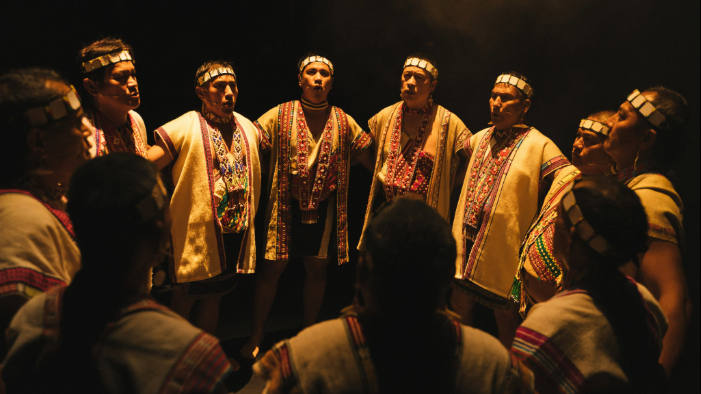
Image 1: Bunun polyphonic music pasibutbut Used with permission from the Bunun Cultural Association of Xinyi Township, Nantou County.
2. Bottom-up community transmission and cultural tourism
Often tied to practical livelihood needs, these varied initiatives align with the rise of cultural tourism, integrating traditional music and dance with cuisine and local landscapes to build community-based cultural tourism. The following are several representative examples.
Over the last couple of decades, some Indigenous communities have journeyed deep into the Central Mountain Range in search of their ancestral villages that were abandoned under Japan’s ‘group relocation’ policy. In these arduous journeys of cultural reconnection, the chanting of ancient songs has become a vital medium linking them to their ancestors and traditional heritage. For example, in Bahuan Village of the Bunun in eastern Taiwan, a young musician named Tulbus Mangququ has led an annual journey across the Central Mountain Range to ancestral homeland in the west.
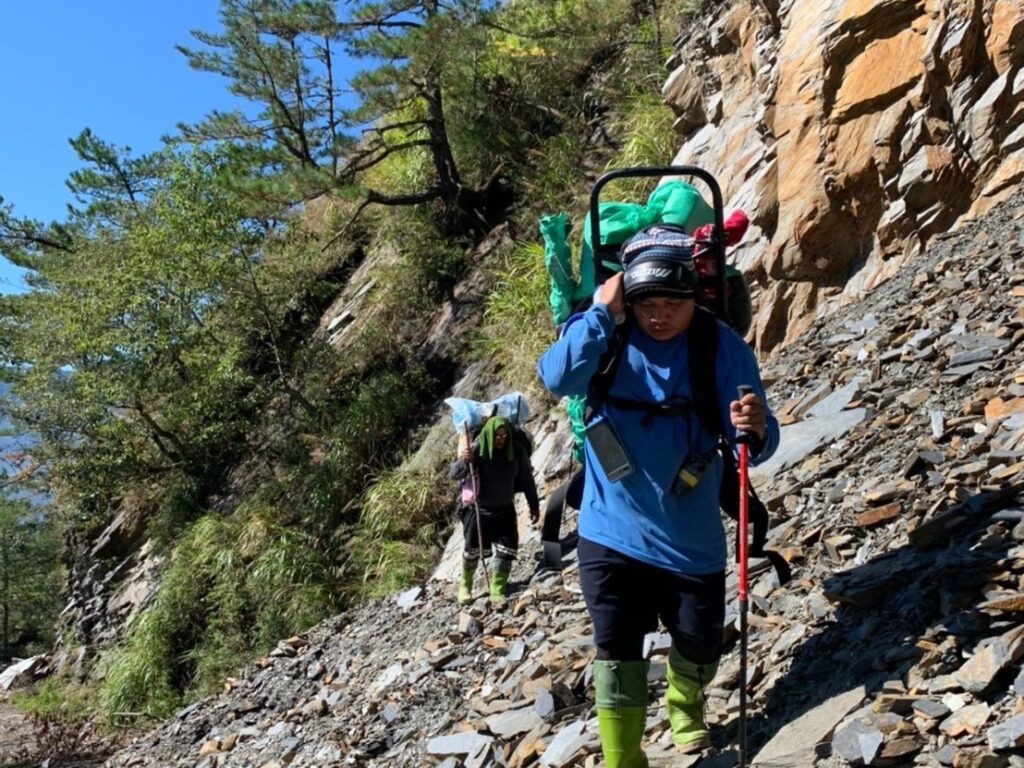
Image 2: Tulbus Mangququ leading a pilgrimage to the ancestral homeland on the western side of the Central Mountain Range. Used with the permission of Tulbus Mangququ.
Some communities have used their traditional music and dance to comfort and restore the body, mind, and spirit of their people after natural disasters. Following the 1999 (921) earthquake, in Sdringan village of the Seediq, Presbyterian pastor Hsu Yueh-Feng encouraged elders to revive the ritual dance-song uyas kmeki. The effort produced a recording and became a catalyst for Seediq revival. Under the stewardship of elder Obin Nawi, the ‘Seediq Traditional Culture Troupe’ formed by the Sdringan villagers was later designated a county-level intangible cultural heritage transmitting group.
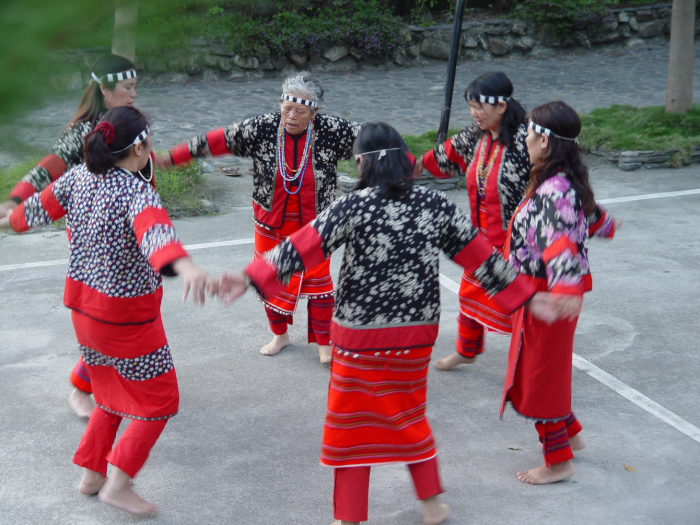
Image 3: Obin Nawi participating in the Seediq ritual dance-song uyas kmeki. Credit: Yuh-Fen Tseng.
Some Indigenous Taiwanese have founded their own tribal music and dance troupes and performance spaces. For example, Indigenous leader Akawyan Pakawyan (Lin Qing-mei) has spearheaded ongoing transmission of language and music in Puyuma villages of the Pinuyumayan. The Pakawyan family singing group created the performance troupe ‘High Mountain Dance Company,’ and integrated traditional songs into mother-tongue curricula at the village elementary school.
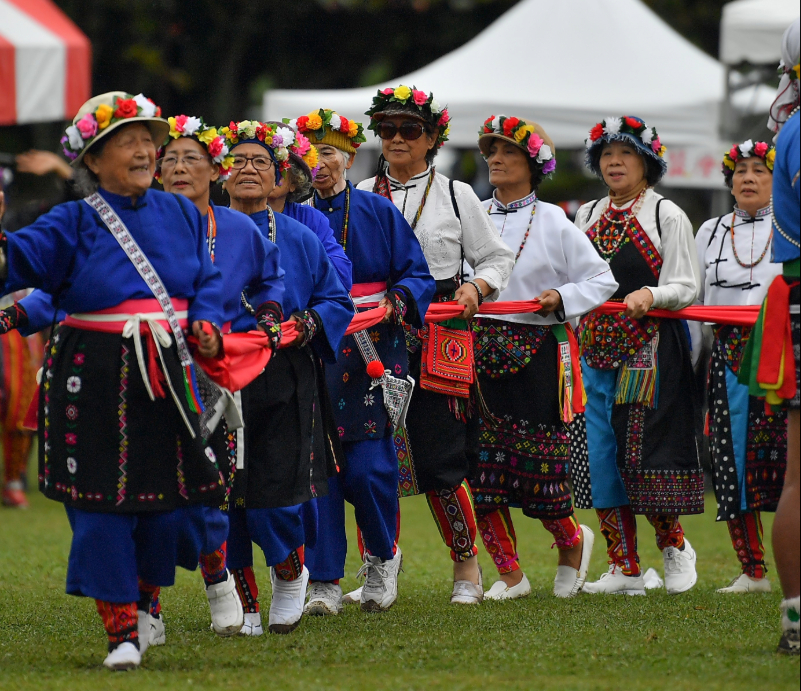
Image 4: Akawyan Pakawyan leading the village youth in dancing during the festival. Used with permission by Akawyan Pakawyan.
A notable example of Indigenous-led music transmission integrated with ecotourism is the Smangus Village of the Atayal, which has long worked to preserve the traditional forest ecology within its ancestral territory. The community has woven Lmuhaw oral traditions and mouth-harp performance practices into forest-based tourism and local guesthouse activities, developing a distinctive model of culturally grounded ecotourism.
Among the four Indigenous community models discussed, the Smangus Village of the Atayal is the only example to have developed a relatively self-sufficient form of cultural tourism. Through community-wide cooperation, equitable management structures, and strong alignment between cultural values and tourism practices, Smangus has created a model in which economic benefits, cultural revitalisation, and ecological stewardship mutually reinforce one another. By contrast, the other cases demonstrate partial success alongside ongoing difficulties—such as uneven benefit distribution, limited organisational capacity, or reliance on external actors. Together, these examples reveal both the potential and the constraints of Indigenous community-based cultural tourism in contemporary Taiwan.
3. University-led ‘Meetings of Knowledges’
Universities in Taiwan have been inspired by the approach of José Jorge de Carvalho’s ‘Meeting of Knowledges’ movement, which seeks to decolonise Eurocentric university curriculum. Launched in Brazil in 2010, it has expanded to other parts of Latin America, Europe, Australia, and Asia. In Taiwan, initiatives aimed at giving Indigenous music and dance transmission a legitimate place within formal academic education and advancing the decolonisation of university programs have, in the author’s view, progressed from an exploratory stage to concrete institutional planning.
Two projects led by the author are presented here to illustrate the kinds of efforts undertaken during the exploratory stage. The first, ‘Seediq Balay, Let’s Dance Together?’, is a cross-boundary music-theatre collaboration between the Seediq Traditional Cultural Troupe and the Wind Ensemble of National Chiayi University (NCYU), commissioned by the Taiwan Music Institute. This project brought applied ethnomusicologists, composers, Seediq culture bearers, and a university ensemble into close collaboration. The hallmark ritual dancing song uyas kmeki was presented without compromising its musical integrity or cultural subjectivity, while the NCYU ensemble performed music drawn from its melodic lines, polyphonic textures, and improvisatory mechanisms. Another important feature was the exclusive use of the Seediq language throughout the work, accompanied only by projected Chinese translations.
Following the premiere, the project received both positive responses and critical questions. The conceptual framework, methodology, and implementation process of this project are discussed in detail here.
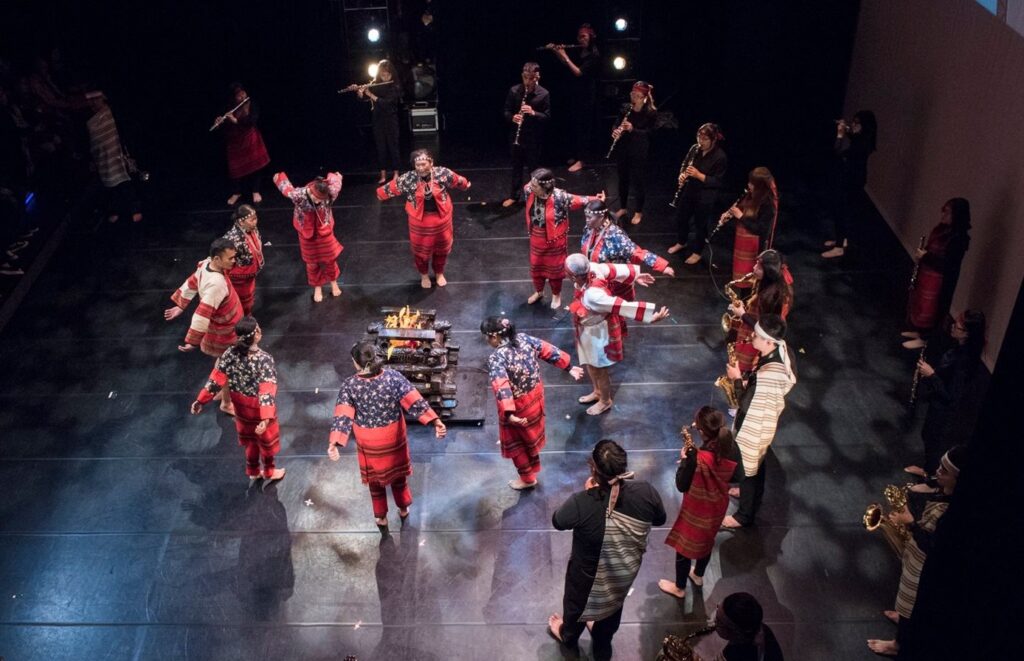
Image 5: Seediq Balay, Let’s Dance Together! Seediq Traditional Cultural Troupe and NCYU Wind Ensemble. Used with permission by the Taiwan Music Institute.
The second example,‘Crossing Ridges—A Bunun Musical,’ is an epic theatre production initiated in response to an incident of Indigenous intellectual infringement in a cross-domain performance involving pasibutbut. Aiming to correct the mistakes and address the harm caused, the project brought together applied ethnomusicologists, composers, the Bunun Cultural Association in Xinyi, Nantou, and the National Chinese Orchestra Taiwan.
University music students participated in administrative and backstage theatre work, enabling deeper and more sustained interactions with Indigenous practitioners. The creative process also facilitated meaningful dialogue between the musical worlds of Bunun polyphony and a Han Chinese orchestra, resulting in a degree of artistic, cultural, and emotional reconciliation. The video recording of the production later received the 2022 Golden Melody Award for Traditional Arts and Music (Best Audiovisual Publication).
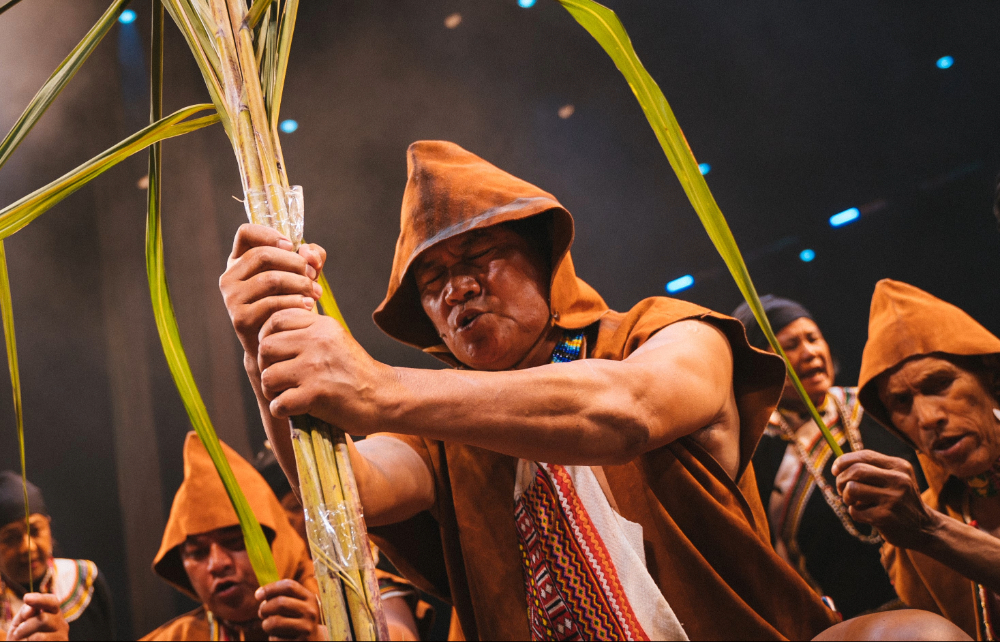
Image 6: Crossing Ridges-A Bunun Musical: Pislahi-Pre-Hunting Worshiping Song. Used with permission by the Bunun Cultural Association of Xinyi Township, Nantou County.
It is important to note that such performances, both in Taiwan and internationally, have existed for many years. Some scholars critique the unequal power relations they entail, arguing that many of these practices fall short of achieving decolonial goals. From my perspective, however, as with any research method or artistic approach, the critical factors lie in the process itself and in the professionalism and ethical commitments of the practitioners involved.
The Bunun musical theatre production discussed above emerged directly in response to a national-level cross-disciplinary performance that violated traditional taboos concerning the Bunun pasibutbut and showed profound disrespect to the performers. The incident provoked widespread outrage among Bunun communities across Taiwan and even escalated toward legal action. When the same cultural institution later invited me, as an ethnomusicologist, to curate another performance, I accepted out of a sense of academic and social responsibility. Throughout the creative process, I acted as a mediator between community performers and the institution, ensuring that Indigenous musical and dance subjectivity remained central to the work. The resulting production was carried out with careful attention and accountability.
Two institutions in Taiwan have recently taken significant steps to support Indigenous music and dance transmission. At my home institution, National Chiayi University, collaborative work among universities, government agencies, and Indigenous communities is currently moving into the planning stage for establishing an ‘Indigenous cultural heritage program (ICH).’ This initiative seeks to reform and strengthen the evaluation mechanisms of Taiwan’s existing Intangible Cultural Heritage transmission system. Following Carvalho’s ‘Meeting of Knowledges’ model, the university functions as the facilitating venue, while community elders (Art Masters) serve as the primary transmitters and evaluators. As a mediating institution, the university aims to guide the government-led ICH transmission system into one that provides practitioners with greater cultural agency and fosters a respectful and sustainable environment for cultural transmission and renewal.
Another notable development has taken place at Tainan National University of the Arts, where the Department of Chinese Music has enrolled an Indigenous graduate student specialising in the Paiwan nose flute—an artist who is also a certified bearer of an Important Traditional Performing Art designated by the Bureau of Cultural Heritage. These curricular innovations signal a shift away from past top-down, government-driven transmission models. By positioning universities as mediating educational spaces, such initiatives represent potentially decisive steps toward sustaining Indigenous music and dance transmission and advancing the decolonisation of university music education.
4. Voices of young people
Taiwan’s young Indigenous musicians—endowed with remarkable musical talent—have shifted away from singing others’ songs, whether Western or Han Chinese pop music, and are composing and performing their own songs in their native languages. Much of their creative inspiration and material is deeply rooted in their traditional music and dance heritage. Taiwan’s Golden Melody Awards introduced ‘Best Indigenous Music Album’ and ‘Best Indigenous Singer’ in 2003, attesting to this cultural phenomenon. Recent winners and nominees from diverse groups include Sangpuy (Pinuyumayan; 2013, 2017, 2021), Aljenljeng Tjaluvie ‘Abao’ (Paiwan; 2020), Tulbus Mangququ (Bunun; 2017), and, in 2025, Kumu Basaw (Seediq; Best Indigenous Singer) and Sauljaljui’s ‘VAIVAIK: Seeking Paths’ (Paiwan; Best Indigenous Album).
Their works articulate cultural identity with clarity. In 2025, Taiwan’s leading music institution, the Taiwan Music Institute, held a special exhibition titled ‘Indigenous Popular Music: From Mountain Ballads to Popular Hits’, which traced a century of Indigenous popular music in Taiwan. The publication footprint left by Indigenous musicians within Taiwan’s recording industry vividly reflects the island’s historical journey from colonisation to decolonisation, encompassing the periods of Japanese rule, KMT governance, and DPP administrations.
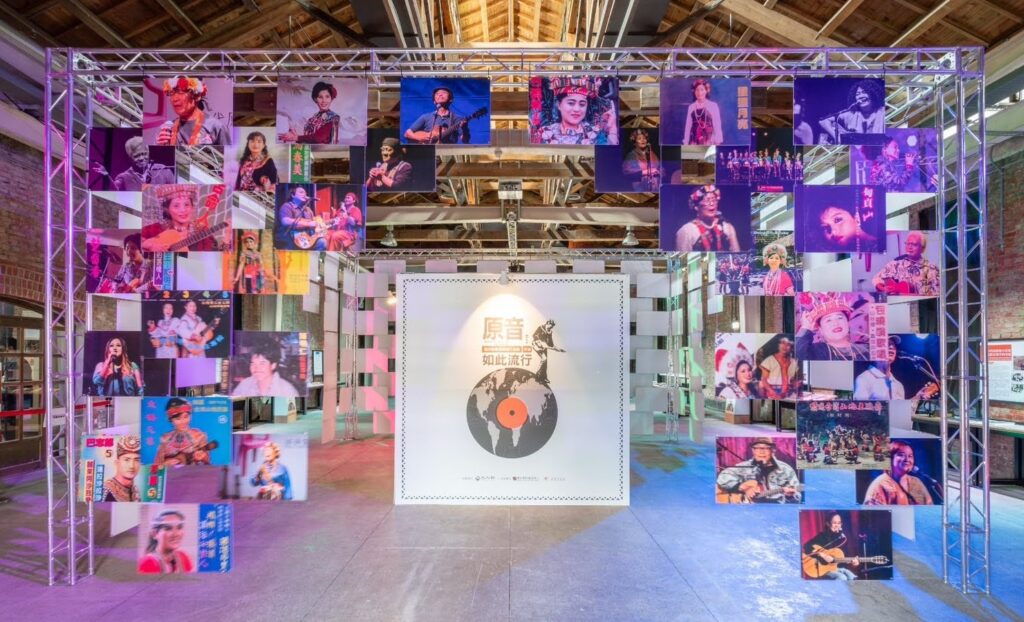
Image 7: Exhibition ‘Indigenous Popular Music: From Mountain Ballads to Popular Hits,’ September 1 to 21, 2025. Used with permission by Taiwan Music Institute.
In recent years young Indigenous intellectuals have courageously gone beyond Western-centric technical training to rediscover their Indigenous cultures and develop distinctive personal styles. This trend is clearly reflected in the 2025 collaborative performance ‘Sway, Sway, Sway’, created by four young Bunun artists who are currently studying at the Taipei National University the Arts: Vava Isingkaunan (Chien Chih-Lin), Kiwa Takishusungan (Pai Yu-Nung), Dahu Takisvilainan (Chiu Wei-Yao), and Aziman Lavalian (Chiang Yun-Hsiang).
The producer and choreographer, Dahu Chiu Wei-Yao, described the work as follows: ‘I realised that ‘swaying’ is actually part of everyday life—we sway in our choices, in our explorations, and on stage—and through each sway, we find our true selves. So, we decided to sway boldly this time, even to make our mistakes beautifully! This production is more than just a performance; it feels like a journey through life itself — letting the body speak, letting culture converse, and allowing everything to begin again’.
Conclusion
Across Taiwan, the revitalisation of Indigenous music and dance reveals not only cultural resilience but also the many pathways through which communities, institutions, and young creators are reshaping the future of their traditions. These efforts collectively demonstrate that cultural transmission is neither fixed nor singular, but an ongoing process negotiated across generations and social contexts. Challenges remain—structural inequities, limited resources, and the unfinished work of decolonisation—but the developments traced in this article show that Indigenous musical and dance traditions continue to grow in strength, agency, and creativity.
In the words of the young creator Dahu: ‘May we not fear to sway. As we learn to stand steady through each sway, perhaps we will gradually see our own path—more beautiful, and truly ours.’
Main image: Chu-Yin culture and Arts Troupe. Credit: Yuh-Fen Tseng.