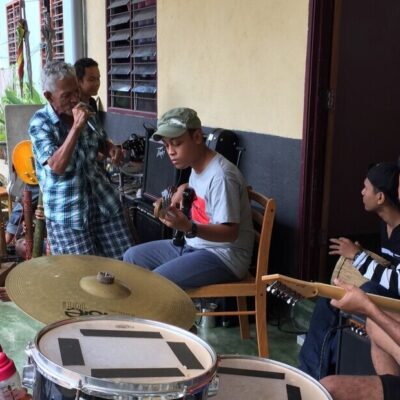
Rice has always been more than a staple in the Philippines—it is the quiet ledger by which families measure hunger and well-being, gútom and ginhawa.
For decades, governments have promised that modernisation and market reform would raise yields and secure food for all. Yet despite waves of policy change, rice farming has grown more precarious, not less. Across Southeast Asia, rising input costs, ecological decline, and trade liberalisation are transforming rural society—pushing farmers out of agrarian livelihoods, commodifying land and labour, and weakening customary institutions. In the Philippines, the liberalisation introduced in 2019 to stabilise prices and curb inflation has instead deepened inequality, indebtedness, and ecological stress in smallholder communities.
Rural survival is sustained not only by capital and technology, but by local knowledge and Indigenous practice. Philippine rice policy must therefore move beyond input-intensive, yield-fixated approaches and instead support the ‘search-for-life’ (hanapbuhay) strategies that many smallholders already practise—livelihood adaptation, diversification, and risk management grounded in community, reciprocity, and resilience-building.
A shifting policy landscape
When Ferdinand R. Marcos Jr. assumed the presidency in 2022 and appointed himself Agriculture Secretary, he pledged to raise rice self-sufficiency to 97.5 percent by 2028. Echoing his father’s 1965 campaign slogan ‘Progress is a Grain of Rice’, Marcos Jr. cast rice once again as the symbol of rural modernisation, positioning the Philippines as a leader in agricultural reform.
But the terrain he inherited is vastly different. Marcos Jr. governs under a fully liberalised trade regime. The 2019 Rice Tariffication Law ended decades of import restrictions, allowing private traders to import rice with tariffs of 35 percent for ASEAN rice and 50–180 percent for non-ASEAN imports. The reform, aimed at stabilising supply, lowering consumer prices, and building market efficiency, restructured the agrarian landscape in at least two ways. First, it redefined the state’s role—from production organiser to tariff collector in a domestic market assumed to be homogeneous, self-correcting, and self-sustaining. Second, rather than improve yield, market ‘efficiency’ became a sorting mechanism that rewarded capital and punished vulnerability. Smallholders deemed ‘uncompetitive’ were squeezed out of production, transferring value and control to traders and importers while worsening rural precarity.
Liberalisation and its discontents
To cushion the shock of liberalisation, the Rice Tariffication Law created the Rice Competitiveness Enhancement Fund (the Fund) that channels tariffs into support for mechanisation, seeds and fertilisers, credit, and extension services. But the domestic rice market is not a single, integrated system but a segmented one, where actors are incorporated into production and commodity flows on profoundly unequal terms: Some enjoy privileged access to land, irrigation, assets, credit, and technology, while others are structurally excluded. In this fragmented value chain, millers, big traders, and local intermediaries capture most rents, while smallholders, especially in remote areas, remain price-takers in asymmetries that deepen rural precarity.
Despite its ambitious design, the Fund’s budget utilisation has been erratic—36 percent in 2019, 86 percent in 2020, 76 percent in 2022, and just 29 percent by mid-2023. By 2024, delayed fund releases, procurement bottlenecks, and weak local capacity left much of the mechanisation budget idle. A congressional review found minimal productivity gains and widening gaps (the Fund functions less as a safety net than a sieve), its benefits captured by those already advantaged.
The policy shift intensified pressures on a farming sector contending with shrinking farm sizes. Philippine rice farming is overwhelmingly smallholder-led, with 93.4 percent of farms smaller than three hectares. The number of farms expanded from 2.16 million in 1960 to 7.43 million in 2022, while average farm size shrank from 3.6 to 0.83 hectares. As liberalisation intersected with segmentation, Fund under-utilisation, and long-standing production constraints, a self-reinforcing cycle emerged: state resources flow through the same institutional and market bottlenecks that sustain trader dominance, leaving most smallholders to depend on their own coping and diversification strategies.
These dynamics, reflected in the continuing decline of the rice self-sufficiency ratio (Figure 1), led to imports reaching 5.4 million tons in 2024, making the Philippines the world’s largest rice importer. Yet policy continues to presume that farmers can align with intensive, commercial production models. In reality, Philippine smallholder farming remains defined by insecure land tenure, debt dependence, poverty, and ecological vulnerability. Cultural practices of reciprocity (bayanihan) and moral obligation (utang na loob), often dismissed as inefficiencies, are in fact forms of local resilience and adaptation in the face of deepening precarity.
Figure 1: Rice self-sufficiency ratio (SSR) of the Philippines, 1998 to 2024
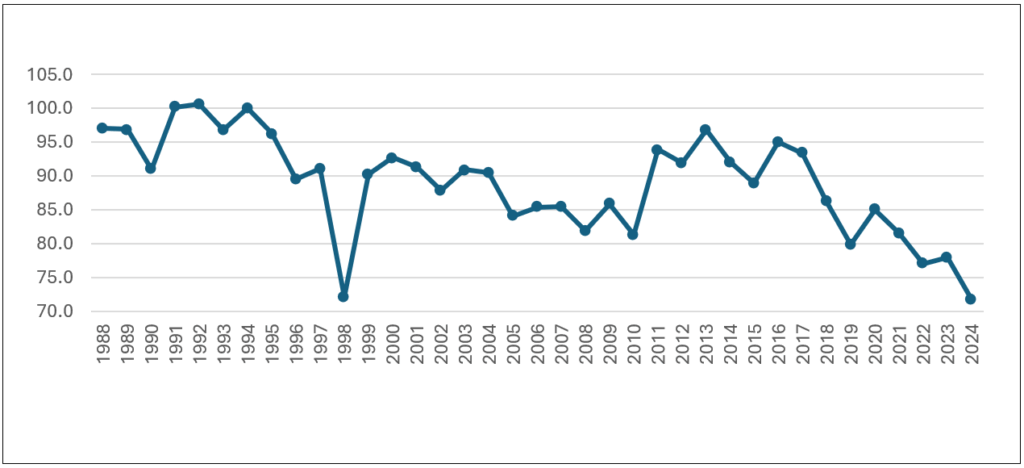
Source: https://openstat.psa.gov.ph
Farmer voices from Narra
This article examines how smallholders in the municipality of Narra—the ‘rice granary’ of Palawan province—align local knowledge and livelihood realities with state interventions, such as the Rice Competitiveness Enhancement Fund and broader narratives of yield maximisation. The findings are based on interviews, a December 2024 workshop with farmers and agricultural officials, and a follow-up agricultural census conducted in Purok Damsite, a hamlet in Barangay Calategas, Narra, in April and May 2025.
Many of the smallholders interviewed are migrants from Negros, Iloilo, and Mindanao, who built a rich farming culture blending lowland and upland knowledge—a mosaic of practices influenced by the Indigenous Tagbanua and Pala’wan peoples living further upland in the Victoria-Anepahan Range. The ways in which farmers identify with ethnicity, knowledge, gender, and place—whether as Palaweño or indigenous (katutubo)—is often a matter of degree rather than absolute kind. This fluidity reflects the complex and relational nature of Indigeneity in the Philippines. The local knowledge and perspectives discussed below emerge from this interwoven social and ecological landscape.
Livelihoods in transitions
Rice is central to Filipino identity. Beyond being a staple food, it symbolises life, social bonds, and tradition in both rural and urban spaces. But rising production costs, weather unpredictability, and cheap imports mean that rice farming is a risky venture, especially for asset-poor and capital-deprived smallholders. ‘We work the same land,’ said one farmer, ‘but the reward keeps shrinking.’
Consequently, and as confirmed by the Damsite village agricultural census, a quiet but significant transition is taking place. Only 42 percent of households in Damsite now depend primarily on farming: 16 percent rely on rice farming, 20 percent have transitioned to vegetable growing, which requires significantly less land, capital, and post-harvest needs. About a third, or 29 percent have exited farming as their livelihood altogether, while another 29 percent are in transition, combining cultivation with wage work, trading, or migration. Across all households, men take short-term jobs during lean months; women trade vegetables or cooked food; relatives share resources through informal credit and labour exchange. Livelihood diversification is less a choice than a strategy of endurance to keep households afloat when markets and policies fail.
Land, tenure, and the everyday negotiation of access
Many plots are held informally without proper titles or registration. Land records are often incomplete or inconsistent, producing both vulnerability and flexibility. Of 104 surveyed households in Damsite, 94 reported controlling land, yet only six held formal titles. Most rely on stewardship contracts, tax declarations, barangay certificates, or verbal agreements recognised through community consent.
This informality both constrains and enables. It bars entry to official programs such as the Fund or crop insurance, yet it allows flexibility: land can be shared, lent, or reclaimed without bureaucracy. Over time, communities have built their own informal tenure systems anchored in tiwala (trust) and usapan (dialogue). Elders recall planting coconuts or using other trees to indicate boundaries and marking waterlines to settle disputes, while the village captain (barangay Kapitan) mediates through consensus. Tenure security here rests not on documents but on recognition and memory—a quiet but resilient form of coping and local governance.
Exclusion and unequal access to support
Exclusion cuts deeper than a lack of documentation. In Damsite, state support often follows the trail of formal titles, IDs, bank accounts, and registration with the Registry System for Basic Sectors in Agriculture (Registry System)—requirements many smallholders cannot meet. Tenants, sharecroppers, and women cultivators are the most affected. ‘Only those on the list receive help,’ one farmer noted.
Farmers respond with quiet improvisation. Some register under a relative’s name; others form loose groups to access collective inputs or share machinery borrowed from better-connected neighbours. Yet the result is uneven: while all confront the same ecological and market pressures, those with land titles, machinery, or ties to traders and officials capture the bulk of benefits, while those without remain dependent on informal lenders and high-interest trader credit. Exclusion is due not just to administrative barriers, but also to widening social differentiation. Liberalisation, intended to level the field, has instead widened it—linking state assistance to assets that many rural families do not have.
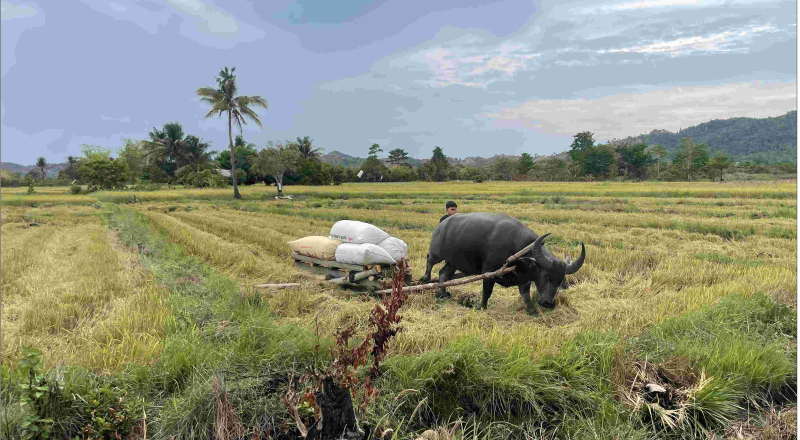
Image 2: Harvesting palay in Sitio Damsite, Calategas, June 2024. Credit: Eric D U Gutierrez.
Precarious harvests and ecological strain
Even when land and access are secured, yields remain vulnerable. One in three households lost their crop to pests, floods, or drought. Continuous cropping of short-maturing varieties has exhausted the soil and made it acidic, while fertiliser and pesticide prices soar. ‘Every season is an experiment,’ said a farmer.
Households adapt with ingenuity: rotating rice with corn, mungbean, or other food crops; mixing chemical and organic inputs (e.g. chicken and cow poo); brewing herbal pesticides from chilli and ginger; or using vinegar as a weed killer. These locally generated innovations, exchanged through umpukan (gatherings) and kin networks, constitute an evolving system of ecological knowledge. They illustrate smallholders’ situated expertise, such as reading weather shifts, soil conditions, and animal behaviour, to sustain production amid declining institutional support.
Insurance, uncertainty, and improvisation
In Narra, unpredictable climate—sudden floods, long dry spells, and shifting pest patterns—make every crop a gamble. Crop insurance, meant to buffer this uncertainty, has largely failed. Many are unaware of the benefits of insurance or how to apply for it with the Philippine Crop Insurance Corporation, which struggles to reach remote areas. Those without registration with the Registry System, such as those without the necessary documentation, are excluded. Others may qualify but lack bank accounts, complicating the payment process. ‘We know about insurance,’ an upland vegetable grower said, ‘but we are not included (hindi kami kasali’).
To cope, households rotate inputs, stockpile them when possible, and store leftover seed in recycled sacks for the next season. A few save small cash reserves in cooperative groups or lend among kin—a local safety net stronger than any bureaucratic scheme. Others rely on experience: reading cloud movements, insect behaviour, and the scent of soil to predict rainfall. Each technique, however modest, reflects a culture of adaptation where learning and survival merge.
Mechanisation and mismatch
Mechanisation—the priority to which 50 percent of Rice Competitiveness Enhancement Funds are allocated—has yielded mixed results. In the village of Calategas, a local farmers’ association received a harvester through the Fund but lacked post-delivery support and maintenance. Microfinance agency staff confirm that many machines sit idle when they break down or when parts are unavailable, resulting in damaging disruptions to cropping schedules. Large tractors work best on flat, contiguous land, but Narra’s fragmented, sloped lands, crisscrossed by many embankments (pilapil), are better served by small hand tractors and carabaos. ‘A tractor,’ said a farmer, ‘can’t climb where the carabao can and can’t do hook ploughing (sungkit araro) on plot edges.’
Farmers note that mechanisation saves time but not necessarily costs; machines ease labour but seldom raise yields. Hence, the adoption of machines reflects pragmatism: Rather than heralding modernisation, machines have become coping tools in the sense that the time saved enables farmers to do other tasks.
Water, labour, and the erosion of reciprocity
About 58 percent of Damsite households benefit from the community irrigation system; others rely on rainfall or streams. However, scarcity resulting from El Niño weather events, watershed degradation, and competing uses for mining, housing, tourism, and domestic supply has created water disputes that have deepened existing inequalities. In May 2024, rice fields and vegetable plots near the highway withered and burned due to a prolonged drought. The local irrigators’ association has enforced rationing in the dry months, but it does not solve the problem. Some have abandoned farming due to water access issues.
Labour patterns reveal similar shifts. The traditional bayanihan or reciprocal labour exchange has waned considerably as paid labour has become dominant. Rising labour costs push more than half of farmers to adopt cheaper but lower-yielding broadcast seeding (pasabog) instead of the labour-intensive transplanting (patanim). Herbicides have replaced manual weeding, saving time but eroding embankments.
These changes, however, do not mark the full disappearance of solidarity, only its transformation. A young couple with small children said they moved back from the city because in Damsite, ‘we will not get hungry, we can always rely on kin and neighbours.’ The moral economy persists, quietly resisting the full commodification of rural life.
Traders, markets, and local price power
Most farmers in the village of Calategas sell palay (unmilled rice) to private traders who provide transport, credit, and quick payment—services the state rarely offers. Yet these relationships are deeply asymmetrical. If markets were perfectly integrated, a smallholder in Narra could sell palay to any buyer nationwide, and competition would equalise farmgate prices. In practice, traders dominate nodal points in segmented local markets, depressing prices and capturing disproportionate value. The National Food Authority’s limited buying capacity and slow payments leave smallholders with little bargaining power.
Without drying or storage facilities, farmers must sell immediately after harvest, often at a loss. A few with storage can wait for prices to rise, but most cannot. Market segmentation thus concentrates advantage among better-connected traders, while farmers at the margins adapt by diversifying sales, forming small cooperatives, or relying on kin-based marketing arrangements. These modest strategies buffer shocks but cannot offset the structural asymmetry that continues to define rural trade.
Coping economies and the meaning of hanapbuhay
Across Narra, smallholders respond to liberalisation and ecological strain by building what might be called a coping economy—a flexible web of practices that combine farming, wage work, remittances, and reciprocal support. Rather than abandoning agriculture altogether, smallholders embed it within a wider diversified livelihood system that balances necessity and dignity. Households combine part-time cultivation, trader-mediated credit, kin-based reciprocity, and off-farm work in fluid livelihood repertoires. Agrarian change is not a simple transition but a reworking of rural life into hybrid, coping economies.
This should prompt a shift into how agrarian transformations are understood—from linear disappearance toward diverse, negotiated forms of persistence. A coping economy draws strength from local knowledge and moral values: cooperation (pakikipagkapwa), trust (tiwala), and obligation (utang na loob). Through these, families share resources, coordinate labour, and manage debt without formal contracts. Adaptation here is both social and technical, guided by intergenerational learning.
Seen through hanapbuhay, literally the ‘search for life’, these strategies are not signs of inefficiency but of resilience. They illustrate how rural households sustain food security through ingenuity, reciprocity, and place-based knowledge when formal markets and state programs fall short.
Rice policy recommendations
Current policy remains fixated on competitiveness—measuring success by yields and import reductions while overlooking the social foundations that sustain production. Smallholder rice farmers are often assumed to be natural yield maximisers who simply require injections of inputs (e.g., seeds, machinery, chemicals, and credit) to be competitive in liberalised rice markets. But lived realities in Calategas show that smallholders are not passive victims but active agents who adapt through diversification.
Rather than resting on abstract market ‘laws’ of comparative advantage and the ‘invisible hand’, agricultural policy should be grounded in the moral economy of hanapbuhay—prioritising food security and striving for a balance between the interests of rice consumers and its smallholder producers.
To make policy genuinely responsive to rural life, reforms must build on the adaptive systems of smallholders rather than override them:
Re-align mechanisation priorities. Support small, locally suited machines and community-run repair systems instead of large, capital-intensive units.
Expand registration and insurance. Simplify the Registry System for Basic Sectors in Agriculture enrolment and documentation so excluded farmers can access subsidies and crop insurance.
Reform credit schemes. Design loans with flexible repayment and community-based collateral that reflect local paghiram (borrowing) norms, not rigid banking models.
Invest in irrigation equity. Strengthen and expand communal irrigation, which delivers more inclusive gains than mechanisation alone.
Foster participatory research and dialogue. Ground future policy in local evidence and farmer perspectives, as in the Calategas census, to ensure reforms reflect lived realities.
Authors: Dr Eric D U Gutierrez, Prof. Wolfram Dressler, Dr Trent Brown, Dr Dominic Glover, A/Prof Brooke Wilmsen, Mercedes Limsa, Richelle Cañete, Rowelyn Agravio, Demi Divinagracia, and Dr Michael Pido.
Main image: Farm workers in Sitio Damsite spraying two-week old rice plants. Credit: Eric D. U. Gutierrez.