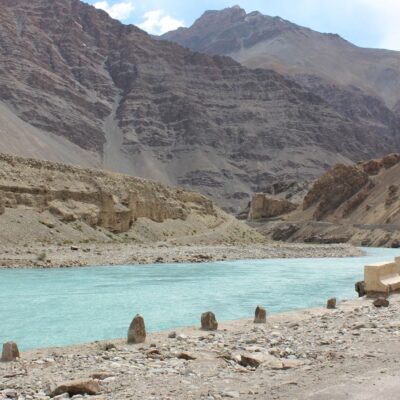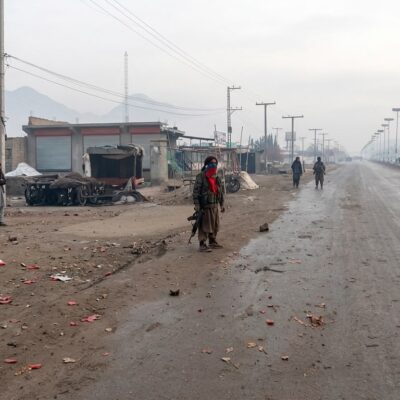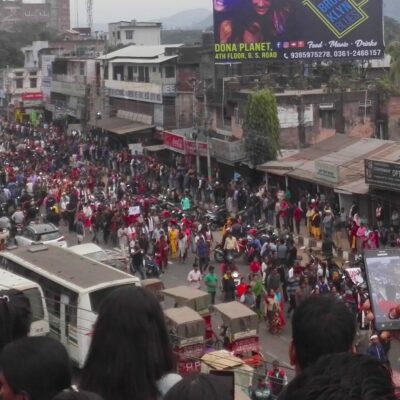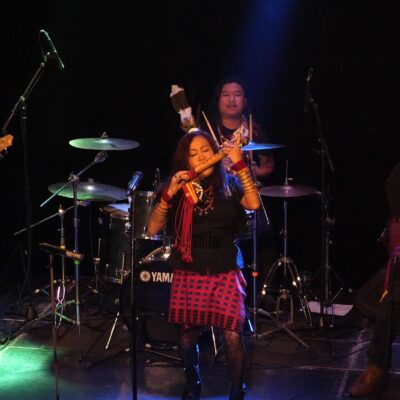
In October and November 2025, I travelled more than 3,200 kilometres across seven Indian states selected for regional diversity as part of the Ride for Mental Health project—an independent, community-based initiative I conceptualised and led.
What emerged was not a vocabulary of pathology, but of endurance. Women rarely named ‘mental health’ directly; instead, they spoke of fatigue, silence, and the responsibility to hold family life together. Much of this centred on forms of labour that remain socially unrecognised and undervalued—caring for children and the elderly, managing households, absorbing the failures of public services, as well as workplace discrimination and, in some cases, violence at home.
The Ride for Mental Health project
Moving across urban, semi-urban, and rural areas, I facilitated 10 open-ended community sessions and 30 group discussions with women in households, care homes, university campuses, and shared community spaces over 26 days. I participated in 30 formal interviews and more than 80 informal conversations about well-being, documented with informed consent using pseudonyms.
I argue that women’s mental distress in India is not incidental or individual but is structurally produced through the everyday organisation of gendered labour, violence, and state neglect. In this sense, rather than treating mental health as a purely clinical condition, my analysis conceptualises it as a spectrum of mental distress produced through everyday social arrangements—from extreme fatigue and stress to depression, and in its most severe form, suicide. Structural discrimination offers a useful lens here: harm embedded in ordinary life rather than confined to visible or isolated events. This perspective shifts attention from individual vulnerability to the social conditions that make distress predictable and unevenly distributed.
As the sections below demonstrate, national data on gendered violence, unpaid labour, and suicide rates reflect the very pressures women described: intimate partner violence that goes unreported, care work that consumes hours without recognition, and discrimination in the workplace and cumulative strains that, in extreme cases, lead to death. These figures do not explain individual experiences, but they show that what individual women experience is widespread and patterned.
These arrangements are shaped by overlapping structures—heteropatriarchal norms and caste, class and religious hierarchies. In the current Hindu nationalist political context, this unevenness becomes more visible, especially for Muslim women navigating heightened scrutiny and exclusion. Adivasi and trans women face distinct, layered forms of marginalisation that this fieldwork could not fully capture—an important limitation.
Intimate partner violence
In some cities a factor contributing to gendered violence became visible: through liquor shops. In parts of Beawar, Rajasthan, I observed that liquor shops appeared strikingly visible in the local landscape. When I mentioned this to a local mental health consultant, Ishwar* lowered his voice and said, ‘You don’t see how this plays out inside homes. No one wants to talk about it.’
Across conversations, women described the effects of alcohol use by male partners or family members. Evenings were often framed in terms of waiting—waiting for someone to return, and for the mood they might bring with them. For some, this meant anticipating alcohol-related tension or raised voices; for others, it involved managing verbal conflict or the possibility of escalation. Women spoke about keeping children occupied, lowering their voices, and avoiding conversations that might trigger conflict. These were not always described as responses to violence, but as routine adjustments. Yet they required constant attention and effort.
Meena*, a 34-year-old mother of four who married at 18, spoke while rolling chapatis, her hands moving continuously as she stacked them beside her. She did not look up when she mentioned her husband’s daily drinking. She described its effects not as a single incident, but as a condition—marked by silence, strain, and the need to avoid confrontation. ‘‘We suffocate alone. When it becomes too much, suicide feels like the only door left.’ The sentence came quietly, as if it had been said many times before.
Her experience is not isolated. According to the National Family Health Survey-5 (2019–2021), 27 per cent of women in India report intimate partner physical violence, with emotional and sexual forms also widely present. Yet help-seeking remains limited: only about 14 per cent of women who experience such violence seek any form of support—whether from family, friends, or formal services such as police, healthcare providers, or NGOs.
What these figures reveal is not simply underreporting, but the absence of safe and accessible systems of support. Violence, in this context, does not always appear as rupture. It persists as a background condition—what can be understood as slow, cumulative harm. The effort required to live with it—quiet, continuous, and largely unrecognised—becomes part of women’s everyday labour.
Care and household work
Women reported that much of their time was organised around looking after others—caring, cooking, cleaning, managing medication, and maintaining routines that hold households together.
This was especially visible in childcare. Women described being primarily responsible for feeding, school routines, and daily supervision, often alongside other tasks that moved without pause. As one mother put it, ‘Children are always with me—I have to manage everything, no matter what else is going on.’ Like other forms of care, this responsibility was absorbed into everyday expectation rather than recognised as labour.
Similar expectations also shaped paid caregiving work. In an old-age home in Maharashtra, Anandi*, a 40-year-old paid caregiver, told me quietly, ‘There is so much irritation inside me. But I swallow it. I remind myself—what if these were my parents?’ Her hands never stopped moving as she spoke—adjusting sheets, checking a bedside table, responding to someone calling from another room. She had been working there for several years. ‘I do this because it is my duty, though it affects me emotionally,’ she added. Although Anandi was employed as a paid caregiver, she described her role less in professional terms than as moral obligation, treating residents as if they were her own parents. Her account reflects how even paid care work often draws on gendered expectations of patience, emotional endurance, and self-sacrifice. She did not pause. The work continued.
In multiple accounts, women spoke about being tired but continuing, about not having time to sit, and about not knowing where their own strain could go. Several described their day not in hours, but in tasks that moved from one into another without clear breaks.
National data reflects what these experiences reveal. The Time Use Survey (2024) shows that 81.5 per cent of women participate in unpaid domestic services—more than three times the rate of men. Women spend an average of 289 minutes per day on these activities, compared to 88 minutes for men. This imbalance extends to caregiving, reinforcing the broader gendered distribution of unpaid labour.
Care, in this context, is not only a set of tasks. It is an ongoing process of emotional regulation—managing one’s own feelings while sustaining others. Feminist scholarship on emotional labour and social reproduction (Arlie Hochschild), alongside Indian feminist work on unpaid labour and gendered social inequality (Devaki Jain; Sharmila Rege), helps explain how sustaining households requires both material and affective work that remains undervalued. This uneven distribution reflects entrenched heteropatriarchal norms alongside the absence of institutional support systems.
As Shushma* put it, ‘Sometimes love without rest becomes punishment.’ The sentence passed quickly, but it captured something central. What appears as care is also labour—frequently undervalued, emotionally demanding, and cumulative in its impact.
These forms of emotional labour were not limited to domestic settings. They also appeared within workplaces, though often in different ways—through institutional hierarchies, exclusion, and the pressure to continually manage oneself within unequal environments.
Discrimination in the workplace
In workplaces, women spoke about keeping to themselves, avoiding conflict, and carefully managing interactions. Fatima*, a young trainer, described her office as ‘cold.’ ‘You just manage,’ she said, suggesting an environment where presence required caution rather than ease.
For many, this ‘coldness’ was not merely interpersonal but institutional. Women described being excluded from informal networks, receiving limited recognition for similar work, and workplace hierarchies shaped by gender, caste, and religion. Direct forms of discrimination were not always openly named, but the need to remain careful—what to say, how to behave, when to remain silent—was repeatedly emphasised.
In a welfare institution focused on education and empowerment in Rajasthan, Lakshmi* privately said, ‘the problem also begins within institutions… No one talks about work culture for women—about discrimination within teams, often shaped by gender, caste, and region.’ Her hesitation reflected how even institutions designed to provide support can reproduce unequal workplace hierarchies.
Similar concerns surfaced during informal interactions. Priya*, who worked in a private media organisation, described experiencing what she called ‘subtle discrimination’ shaped by both gender and caste. She explained that male colleagues were taken more seriously in editorial discussions, while her suggestions were often ignored until repeated by others. ‘You begin to doubt whether you belong there,’ she said. What affected her most was not one incident, but the accumulation of small exclusions that gradually produced self-doubt and eroded her confidence. Over time, she explained, this continuous strain began to affect her mental well-being.
In Goa, after a recorded conversation, Neha*, a news anchor, spoke about her experience with severe depression. ‘How do you make anyone understand?’ she asked. She described the pressure of maintaining composure at work—being present, articulate, and emotionally controlled—while carrying unresolved strain from both professional and personal life. ‘You have to keep going,’ she said, ‘no matter what is happening inside.’ What she described was not one source of distress, but the difficulty of sustaining performance across spaces without relief.
Together, these accounts revealed not a single form of discrimination, but a pattern of everyday exclusions that required constant emotional management. Paid work did not replace existing responsibilities; it was layered onto them. The result was not only longer working hours, but a fragmentation of emotional life—as pressures travelled continuously between home and workplace without pause.
For many young women, these pressures were imagined not as temporary, but as something that would deepen further through marriage.
Young women facing unequal expectations after marriage
Poonam*, a counsellor, described this with quiet clarity: ‘Young women are worried about what marriage demands of them.’ In her experience, mental distress was linked to expectations surrounding marriage—adjusting within new families, becoming primary caregivers and managing responsibilities, and sometimes reducing or leaving paid work after marriage or childbirth. She also described relationships where emotional support from husbands remained limited, leaving women to manage conflict, care, and emotional strain largely on their own.
In classrooms and informal discussions, conversations about the future often shifted quickly toward what would follow. Ghazala*, a student sitting slightly apart from the group, asked quietly, ‘What happens after this?’ The question was not abstract; it carried a sense that certain decisions had already been shaped in advance.
Marriage influenced choices long before it arrived—what to study, how far to travel, and how to behave. Gomti*, a teacher, put it plainly: ‘They are not only studying. They are thinking about where they will go, what kind of family, and how they will fit into new family expectations.’
The word ‘adjust’ surfaced repeatedly. It referred not to an event but to an ongoing process—one that required patience, restraint, and the ability to accommodate expectations that might not be negotiable.
The intersection of religion and gender
For some women, gendered pressures were further shaped by religious identity, adding another layer to what they carried.
Muslim women linked a growing sense of insecurity to the current socio-political climate in India, where Muslim identity has become increasingly visible and contested within public and digital spaces.
Across cities, Muslim women described a heightened sense of awareness—about where to study, how to dress, and how they might be perceived in public spaces. Several spoke about fears of verbal and non-verbal hostility, harassment, or being judged through visible markers of Muslim identity such as clothing, language, or names. ‘We want to live normally,’ Shaqeela*, a mother of two, said, ‘but there is always something in the background.’ She explained that it was not always about a specific incident, but a lingering sense of insecurity shaped by media narratives, online hostility, and everyday interactions.
Mehreena*, a college student, described similar experiences more directly. ‘We are constantly balancing our professional life with our identity. It has become political,’ she said. She spoke about being more careful in classrooms and public spaces—choosing when to speak, avoiding unnecessary attention, and remaining cautious about how visibly ‘Muslim’ she appeared in unfamiliar environments. What she feared was not always direct attack, but the possibility of hostility, suspicion, or humiliation emerging unexpectedly in ordinary interactions.
This vigilance extended into everyday routines: selecting routes, avoiding certain areas, and adjusting how they presented themselves in public. What might otherwise be ordinary decisions became layered with consideration.
For many Muslim parents, these concerns centred on their children—particularly around safety and livelihood. Conversations moved quickly from education to security: whether children would return home without harassment, whether daughters’ clothing might attract unwanted attention or nationalist scrutiny, and whether interfaith relationships would be perceived as attempts by Muslim men to convert Hindu women by marriage.
In one session, an older woman, after learning where I had travelled from, tried to reassure me. ‘You don’t need to worry here being a Muslim—in the south,’ she said, drawing a quiet distinction between regions. ‘It is different from the North.’ The comment was less a claim of certainty than a way of mapping where fear sits more heavily (there is some evidence it is more prevalent in parts of Northern India), and where it feels, if not absent, then somewhat reduced.
These experiences unfold within a broader political context in which Muslim identity has become increasingly visible and contested under the current Hindu nationalist government. Muslim women often encounter exclusion in education, employment, and housing shaped by both gender and religious identity, producing material disadvantage and psychological strain. For Adivasi and trans women, these pressures are often intensified, though not fully captured in this article.
What emerges is a continuous form of vigilance—an awareness that shapes how women move, speak, and inhabit public life. For Muslim women, this becomes an additional layer of labour: managing visibility alongside the already uneven demands of care, work, and family.
What holds, what remains unsaid
Few women spoke in terms of systems. Instead: responsibility, adjustment, managing, keeping things together. These words did not name power directly but revealed how it operates through routine.
Mental distress, in this context, is cumulative. It builds through repetition and responsibilities that cannot easily be set aside.
That phrase ‘we suffer alone,’ spoken by the woman in rural Rajasthan while rolling chapatis, was not an individual lament but a structural diagnosis. By the end of the journey, it pointed to something clear: how gendered labour, institutional absence, and everyday inequality produce distress that remains largely unseen.
*All names are pseudonyms